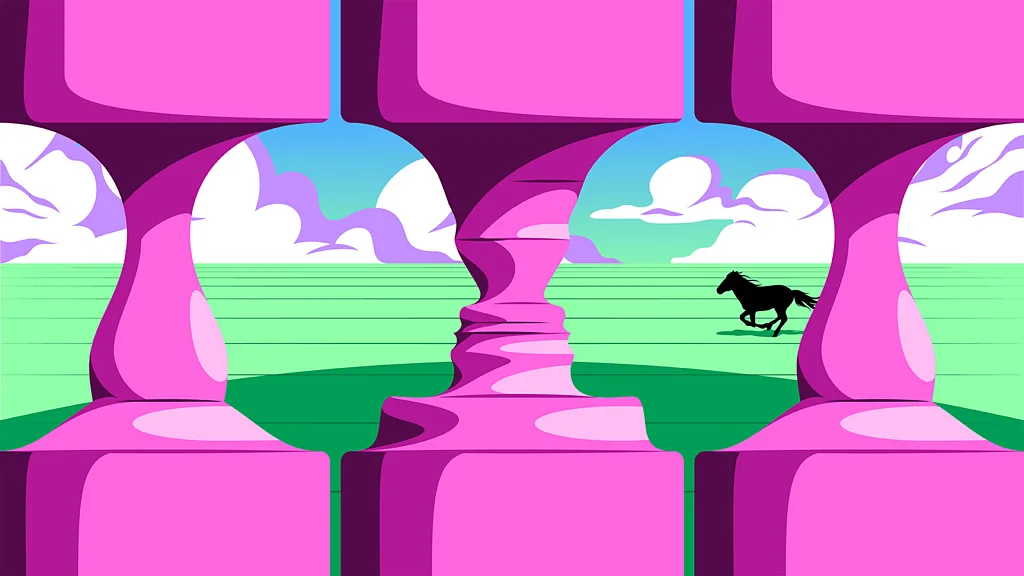
Our eyes often deceive us, but scientists have discovered that certain artificial intelligence systems are susceptible to the same optical illusions. This is reshaping our understanding of the human brain.
When we look up at the moon, it appears larger near the horizon than when it is higher in the sky, even though the moon’s actual size—and the distance between the Earth and the moon—remains essentially constant throughout the night.
Visual illusions like this demonstrate that we do not always perceive reality exactly as it is. They are often viewed as errors made by the visual system. Yet, illusions also reveal the ingenious shortcuts our brains use to extract the most important details from our surroundings.
In fact, our brains process only a fraction of the information in the world around us; handling every single detail of our busy visual environment would be overwhelming, so they selectively pick out only the details we need.
But what happens when you present an optical illusion to a synthetic mind—such as an AI-powered machine vision system? These systems excel at capturing detail. They are designed to detect patterns and flaws that are invisible to the human eye—which is precisely why they are so effective at spotting early signs of disease in medical scans.